
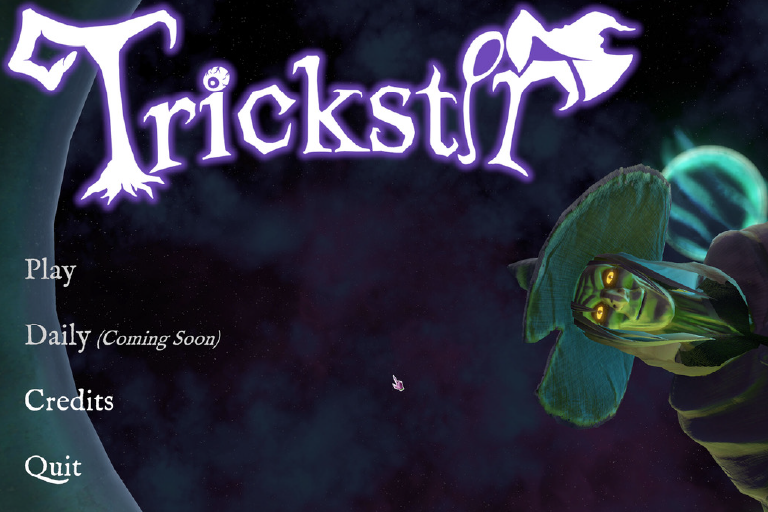
A team of students in Michigan State University’s Game Design and Development program transformed Halloween inspiration into a polished, playable puzzle game as part of their first major course project, showing how hands-on learning can lead to professional-level results.
The project was developed in MI 445: Game Design and Development I, the first course in the university’s four-course Game Design and Development minor. The course brings together students from across disciplines—including Games and Interactive Media, Computer Science, Fine Arts, and Graphic Design—to create original games in team settings.
Students in MI 445 form teams of six or seven members and work through the complete game development process, from concept to final delivery, in just six to seven weeks. Each student assumes a professional role—designer, programmer, artist or producer—mirroring the collaborative structure of real-world game studios.
“The best way to learn game design is by doing it,” said Brian Winn, professor in the department of media and information and director of the Games for Entertainment and Learning Lab. “Each project and each team presents its own unique challenges that the students must learn from. They’re going through the same process that real developers use—just on a smaller scale.”
The Halloween project served as the course’s first team-based assignment. Its learning goals centered on developing teamwork, creativity, and technical execution, from initial brainstorming to creating a polished prototype suitable for a professional portfolio.
Students were tasked with designing an original game inspired by the Halloween theme. One standout result was Trickstir, a whimsical, puzzle-based game praised for its polish and creativity.
“In the short timeframe of the project, the team developed a fun, engaging puzzle game that feels like something that could have come out of a capstone course,” Winn said. “The attention to detail and execution really impressed me.”
Led by junior media and information student Langston Key, the Trickstir team quickly moved from concept to prototype, meeting and exceeding milestones that included pitching their idea, building an early playable version, and refining their design through multiple rounds of testing. By the final milestone, the team delivered a nearly commercial-quality casual game.
“Developing Trickstir has reaffirmed my passion for design despite working in every other discipline on the project too,” Key said. “While creating the levels in Trickstir, a sense of what was artistically and programmatically feasible informed choices I made about the progression, number of mechanics, and worlds that I believe ultimately led to its success.”
The course emphasizes both hard and soft skills—game design principles, programming, art, production, and project management—along with communication, collaboration, and creative problem-solving.
“Each student walks away not only with a finished game for their portfolio,” Winn said, “but with real-world experience in teamwork, iteration, and delivering a complete product on deadline.”
You can find the YouTube trailer here: https://www.youtube.com/watch?v=GsZGp3_luVU&t=1s
By Claire Dippel