
The Department of Media and Information (M&I) is turning to game design to help rural Michigan communities plan their broadband futures.
Jean Hardy, assistant professor in M&I, and Cory Heald, professor of practice in M&I are developing Connected Communities, a new board game designed to train volunteers serving rural broadband task forces. The project is funded by the U.S. Department of Agriculture and conducted in partnership with Merit Network, Michigan’s long-standing research and education network. It blends strategy, community planning and digital equity education into an interactive learning experience.
Training for real-world digital challenges
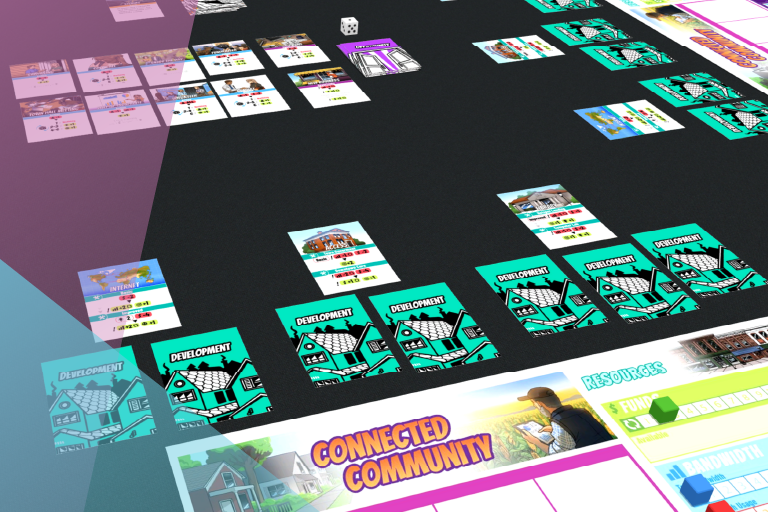
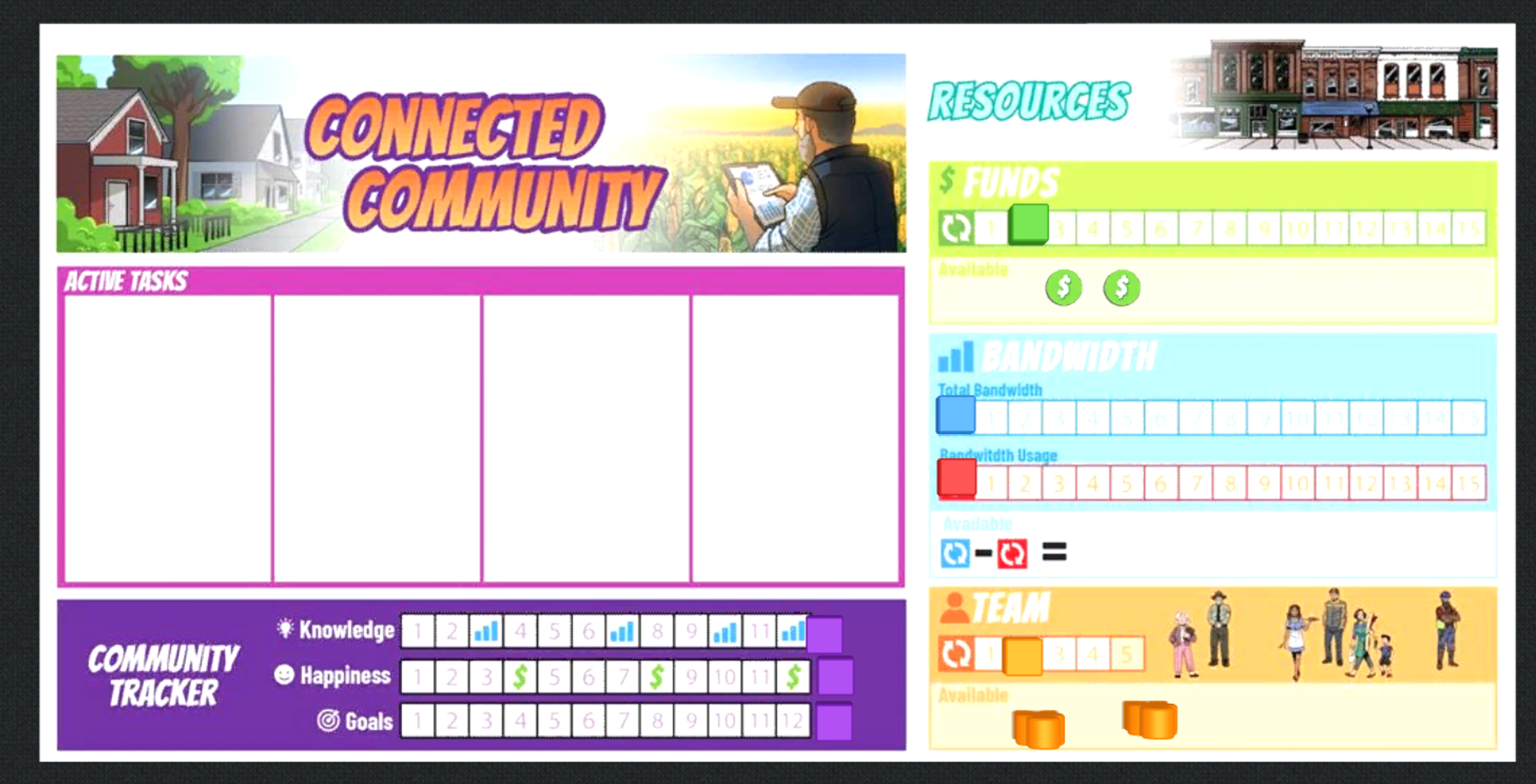
Connected Communities is a resource allocation simulation that places players in the role of local leaders responsible for expanding broadband and digital equity infrastructure in rural towns. Players must decide how to invest limited money and volunteer time in areas such as broadband expansion, digital skills training and community resources like library hotspot-lending programs.
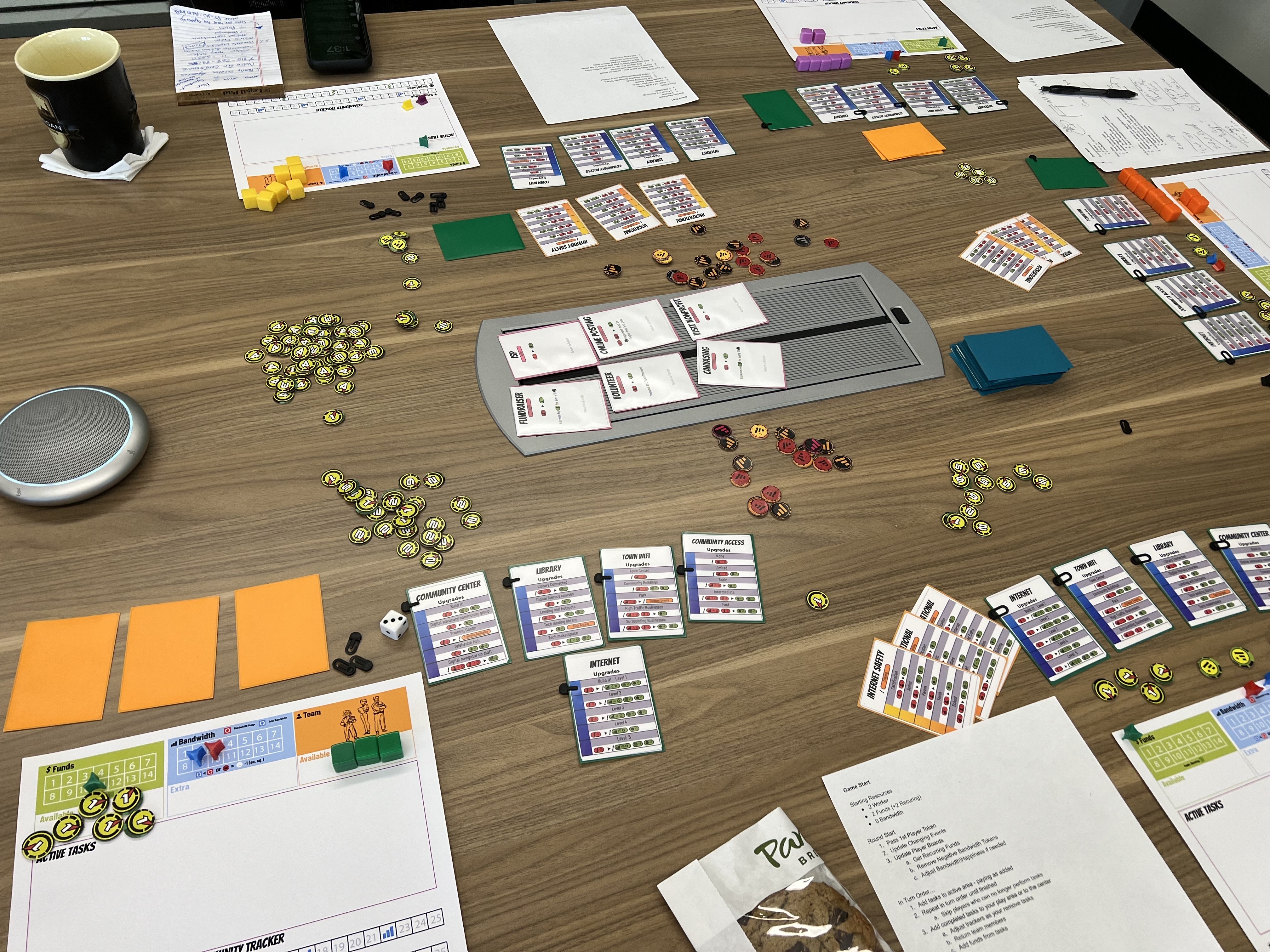
“The goal is to help volunteers think strategically about how resources get allocated during broadband planning,” Hardy said.
Alongside the game, Hardy and Heald are launching a data collection tool to measure players’ perceptions of their community’s ability to address digital equity issues. The research team will also evaluate how effective game-based learning is for training volunteers in rural environments.
A partnership rooted in previous work
Hardy’s collaboration with Merit Network began in 2022, when the consortium funded her research on digital disconnectedness in Michigan’s eastern Upper Peninsula. That earlier project led to the creation of The Game of Rural Life, a board game reflecting the challenges residents face when infrastructure breaks down.
“Merit loved that game and approached me early this year about modifying it for a USDA Broadband Technical Assistance grant,” Hardy said. Instead of a modification, Hardy teamed up with Heald to design a new, broader resource-allocation game. Merit ultimately sub-awarded funding from its USDA BTAP grant to support the work.
Rolling out across rural Michigan
The first groups to experience Connected Communities are community leaders and volunteers engaged in broadband task forces across several rural townships. Merit and the MSU team plan to begin deployments this winter, expanding to additional communities next spring and summer.
Hardy believes the game’s usefulness extends beyond task forces.
“This game could be incredibly helpful as an educational tool for students and everyday people learning about broadband and digital equity planning,” he said. “Expansion packs are already in the works to add complexity for more experienced players.”
Shaping long-term digital equity planning
Ultimately, the team hopes Connected Communities will help rural areas make more informed decisions about where to invest in broadband infrastructure.
“We live in a resource-limited landscape,” Hardy said. “Not every digital divide issue can be solved at the same time. This game gives communities an opportunity to learn, reflect and think about which issues are most important to them—and how to strategically address them.”
As broadband access becomes increasingly essential for work, education and daily life, Hardy and Heald hope their game will empower rural Michigan residents to build stronger, more connected communities.
By Claire Dippel