
Researchers in Michigan State University’s Department of Advertising and Public Relations have received a $35,000 grant to examine whether emerging advertising strategies, including the use of artificial intelligence, can improve digital marketing for horticultural businesses.
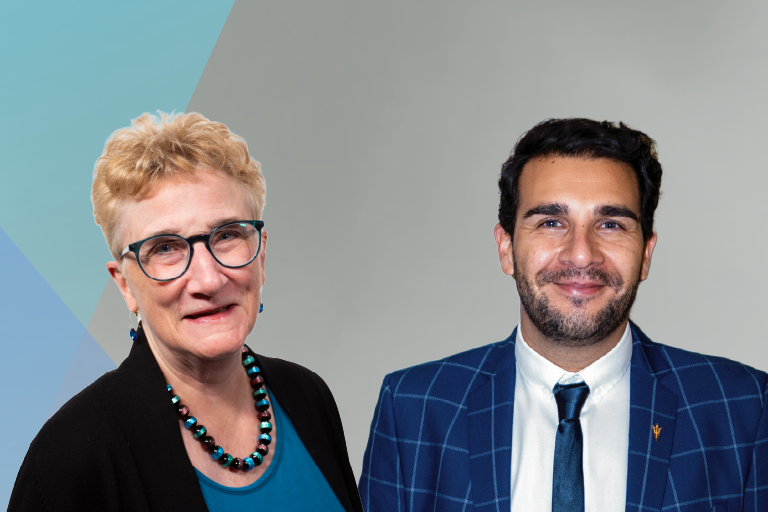
Horticultural Research Institute awarded the grant to Juan Mundel, associate professor, and Patricia Huddleston, professor, along with their collaborators.
The research will explore how social media advertising, personalization and AI-generated imagery influence consumer perceptions and purchasing behavior in the horticultural market.
Addressing a gap in a growing industry
Valued at $18.3 billion in the United States, the horticultural industry continues to grow, according to the U.S. Department of Agriculture. However, online marketing and mobile strategies for live plant sales are still underdeveloped compared to other retail sectors.
This project aims to help horticultural businesses adopt more effective digital marketing strategies by finding what resonates with consumers in online environments.
“The team also found that when endorsers in plant ads match consumers’ ages and ethnicities, the ads feel more personalized,” Mundel said. “The perception of personalization boosts trust in the advertisement, improves overall attitudes toward it and ultimately increases purchase intent.”
Building on earlier research, the team will reassess earlier findings considering rapidly evolving AI technologies, examining how consumers respond to plant marketing images that are either real or AI-generated.
Huddleston added that the research will also evaluate potential downstream effects of these approaches, including both positive and negative impacts on consumer behavior.
Hands-on research experience for students
The grant will directly support graduate and undergraduate students in MSU’s Media and Advertising Psychology Lab (MAP Lab), where students study media and advertising using biopsychological approaches, methods and theories.
Through the project, students will gain hands-on experience applying research methods to real-world challenges.
“Students aren’t just learning concepts in the classroom,” Mundel said. “They’re applying theory and methods to real-world challenges, which deepens their skills while helping offset the cost of their education.”
Current MAP Lab research spans multiple areas, including studies on cannabis marketing and its influence on consumer behavior and willingness to purchase higher-risk products. These projects incorporate both health communication and consumer identity perspectives.
“Students will also learn the ins and outs of collecting eye-tracking data from ‘everyday’ consumers,” Huddleston said. “Which may differ from collecting student data.”