
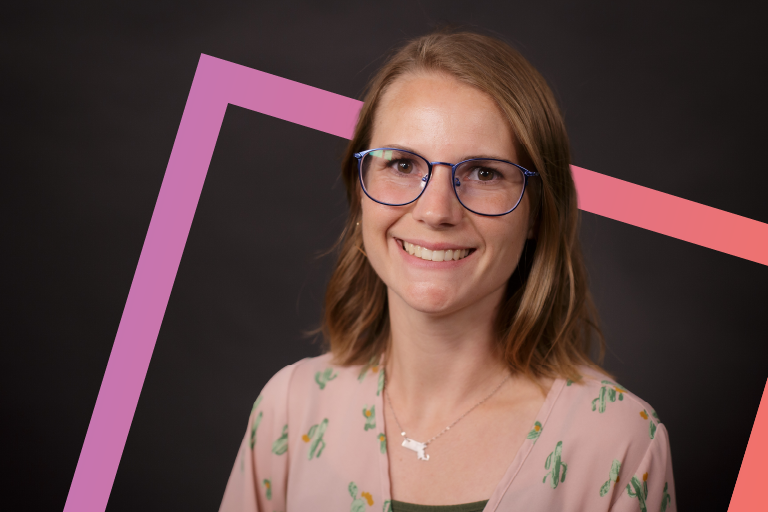
Thea Knowles, Ph.D., CCC-SLP, assistant professor in the Department of Communicative Sciences and Disorders at Michigan State University, and her collaborators have been awarded two competitive grants to support their innovative research on communication challenges in Parkinson’s disease and atypical parkinsonism.
The project is jointly funded by an Early Career Research Grant (R21) from the National Institutes of Health (NIH) National Institute on Deafness and Other Communication Disorders (NIDCD) and a Collaborative Approaches to Resources, Education and Support (CARES) Grant from CurePSP. Co-investigators include researchers from MSU, Henry Ford Health, and the University of Michigan.
Addressing Speech and Voice Challenges in Parkinsonism
Over 50% of individuals with Parkinson’s disease (PD) and related conditions experience hypophonia—a soft, breathy, or hoarse voice that makes communication difficult. Current treatment focuses on reteaching individuals to speak louder and more intentionally, but this approach often places added stress on people managing progressive disease, fatigue, and cognitive changes.
Dr. Knowles’ team is investigating the use of speech amplification devices as a promising adjunctive approach. Their research examines how these portable devices can improve speech volume and clarity, both on their own and when combined with behavioral speech strategies. The team is also working to identify acoustic features and device enhancements that could further optimize outcomes and lead to more personalized, evidence-based treatment options.
“For individuals with Parkinson’s disease or atypical parkinsonism, speech symptom management is not a one-size-fits-all approach,” said Dr. Knowles. “It is essential to research approaches that empower individuals while mitigating treatment-related burdens. Our current research aims to advance patient-centered augmentative speech treatment technology and clinical guidance for neurodegenerative speech and voice disorders.”
Expanding Research to Rare Conditions
Thanks to the CurePSP CARES grant, the project will include individuals with atypical parkinsonism, such as progressive supranuclear palsy (PSP), multiple system atrophy (MSA), and corticobasal degeneration (CBD). These conditions often resemble Parkinson’s at first but progress differently and more rapidly. Traditional speech and voice therapies are often not appropriate for these individuals, who are also underrepresented in communication research.
By combining expertise from MSU Communicative Sciences and Disorders, Neurology, and Computer Science with clinical researchers at Henry Ford Health and the University of Michigan, this collaborative effort is working to develop approaches that reduce treatment burden while improving communication outcomes.
Recognition and Broader Impact
The CARES grant program funds collaborative projects between CurePSP Centers of Care that focus on person-centered care, underserved populations, and education of the medical community. Dr. Knowles’ project is one of only three awarded this year across the national network.
This research underscores MSU’s commitment to advancing interdisciplinary science that makes a meaningful difference in people’s lives. By expanding treatment options for those with Parkinson’s disease and atypical parkinsonism, the project has the potential to improve communication, independence, and quality of life for many individuals and families.
By Claire Dippel