

Dr. Erwin “Erv” Bettinghaus, who devoted nearly four decades of service to Michigan State University — including 20 years as dean of the College of Communication Arts and Sciences — passed away in July at age 94.
Bettinghaus pursued his academic path with determination, earning a bachelor’s degree from the University of Illinois, a master’s degree from Bradley University, and returning to Illinois for his doctorate in communication in 1959. He arrived at MSU from Illinois in 1958, just before completing his doctoral degree, and quickly rose through the faculty ranks. After serving as chair of the Department of Communication from 1972 to 1976, he became the college’s longest-serving dean, leading ComArtSci from 1976 to 1996.
During his two decades as dean, Bettinghaus guided the college through a defining era of growth and transformation. He oversaw construction of its current home — completed in 1981 — which, for the first time, brought together all departments of the college and WKAR under one roof. The building also introduced Michigan’s first anechoic and reverberant chambers, providing cutting-edge facilities for communication research. Even as he championed advanced research spaces, Bettinghaus was equally committed to experiential learning, ensuring students had opportunities to apply what they learned in real-world settings.
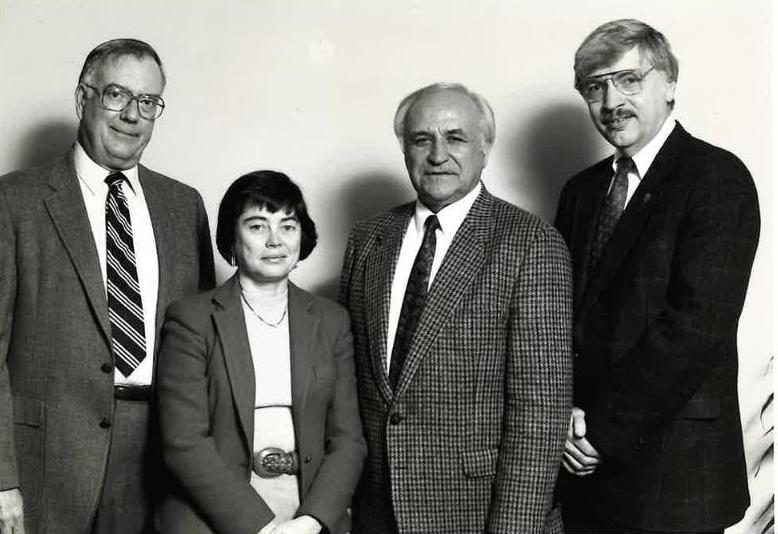
“He loved this University unabashedly, its students and faculty, academic programs, campus, sports teams, and reputation,” said Dr. Bettinhaus’s daughter Karen Keating. “He was immensely proud of his part in MSU’s successes, but even more proud of his part in the successes of the students in his classroom or under his wing as the Dean of the College of Communication Arts and Sciences.”
“Dr. Bettinghaus was a giant in the field of health communication and a valued leader in our college and across the communication discipline,” said Heidi Hennink-Kaminski, Dean of the College of Communication Arts and Sciences. “He left an incredible legacy here in ComArtSci that will surely endure.”
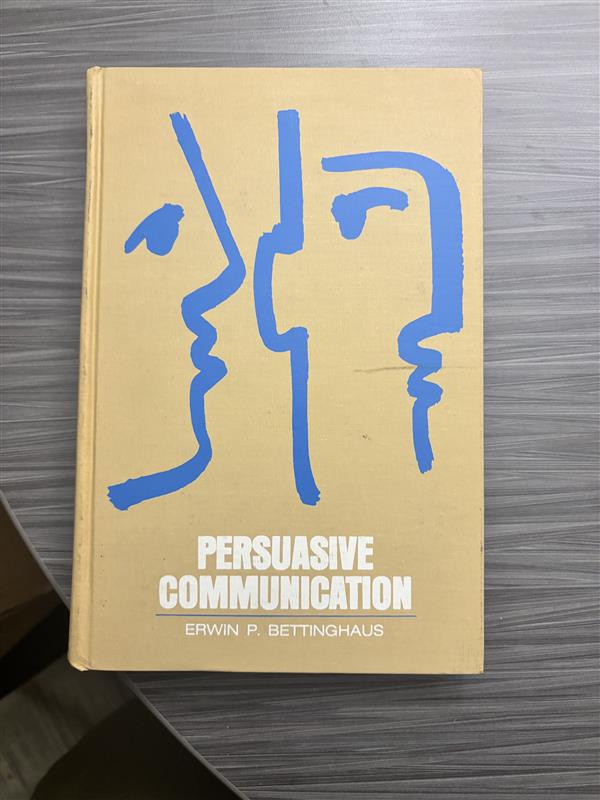
Internationally recognized as a pioneer in health communication, Bettinghaus explored how persuasive communication could advance cancer prevention and public health. His scholarship included the landmark textbook Persuasive Communication, which went through several editions and helped define a generation of communication study. Beyond MSU, he served in leadership roles with the National Cancer Institute, the American Cancer Society, and the American Lung Association, among others. In 1987, he was elected a fellow of the American Association for the Advancement of Science in recognition of his influential contributions to the field. He also was elected president of the International Communications Association, serving from 1982-1983.
Throughout his career, Bettinghaus was also a devoted mentor whose guidance shaped generations of students and faculty. His commitment to the future was reflected in the college’s Future Fellows Fund, which he helped establish to support doctoral students pursuing ambitious research.
One such student who benefited from his mentorship was Michael Cody, professor emeritus of communication at the University of Southern California and Bettinghaus’s co-author of Persuasive Communication — a book which remains relevant today.
“Erv always advised me to be well-prepared, to listen attentively, and to make sure every person knew they’d been heard,” Cody said.
His guidance went far beyond the classroom, modeling not just how to study communication, but how to practice it with integrity and respect. Long after his retirement in 1997, he continued to invest in students and contribute to health communication research through his work with cancer centers and research institutes.

“Dad was an inclusive parent, and an inclusive administrator,” said Keating. “He believed in the equal value of children in a family, and students in a University.”
While his leadership and scholarship set a lasting standard, his legacy is equally defined by the people he inspired, the programs he built, and the values he instilled. The work of ComArtSci today continues to carry forward his vision that communication can serve the public good — improving lives, advancing knowledge, and building stronger communities.