
Susan Wyche, associate professor in the Department of Media and Information, recently received a $35,000 grant through the IDEAS Program.
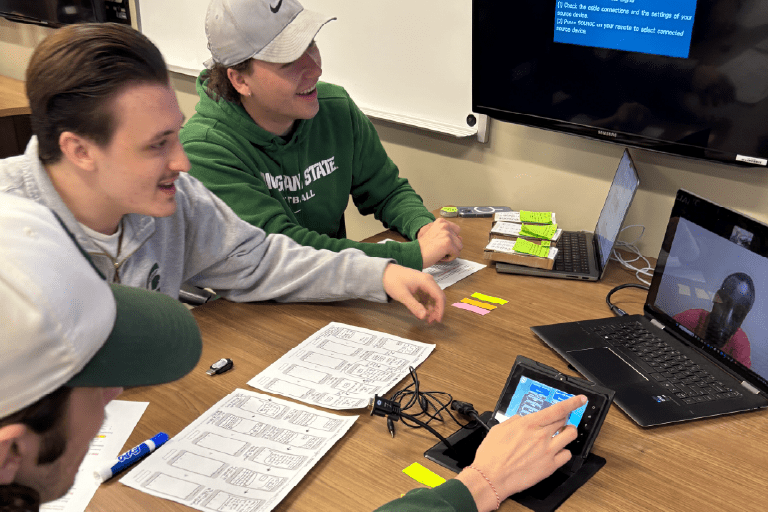
The award supports Wyche’s ongoing collaboration between MSU and Kenya’s Egerton University, connecting students across continents through a shared, human-centered technology design course.
The IDEAS Program, administered by the U.S. Department of State, helps U.S. colleges expand education abroad by strengthening international partnerships, supporting faculty collaboration and fostering innovative virtual and hybrid learning experiences. Wyche’s project aligns with the program’s focus on technology and innovation by using a Collaborative Online International Learning (COIL) model to bring MSU and Egerton students together without the need for travel.
“This award builds upon MSU’s nearly 50-year partnership with Egerton University, as well as my five years of collaborative engagement with faculty and students there,” Wyche said, noting the partnership was originally supported by the Mozilla Foundation. “It gives us the time and resources to deepen this work and continue creating meaningful, cross-cultural learning experiences for students.”
The funding provides Wyche with a course release to further develop the class, support for Kenyan collaborators, supplies for student projects, a return visit to Egerton University and summer salary support. Students in the course collaborate on technology design projects that address real-world challenges, including health, sustainability, agriculture and education.
Egerton students play a central role in the course by sharing their lived experiences with technology use in Kenya and offering feedback on MSU students’ ideas. That exchange helps to ensure that students’ designs reflect local context; it also encourages students to think critically about where innovation comes from and who it serves.
A human-centered design approach is key to the course’s impact, Wyche said, because it pushes students to begin with people’s lived experiences rather than assumptions. “It helps students avoid design choices based on stereotypes or limited understandings of context,” she added.
Wyche said the project is especially meaningful at a time when funding for international research and collaboration is increasingly uncertain.
“Now more than ever, students who want to design technology need opportunities to work across cultures, challenge their assumptions and engage beyond their comfort zones,” she said. “This project gives them that experience in a grounded and collaborative way.”