
Students returning to the College of Communication Arts and Sciences this fall have a newly renovated production studio for broadcast news, sports and live production.
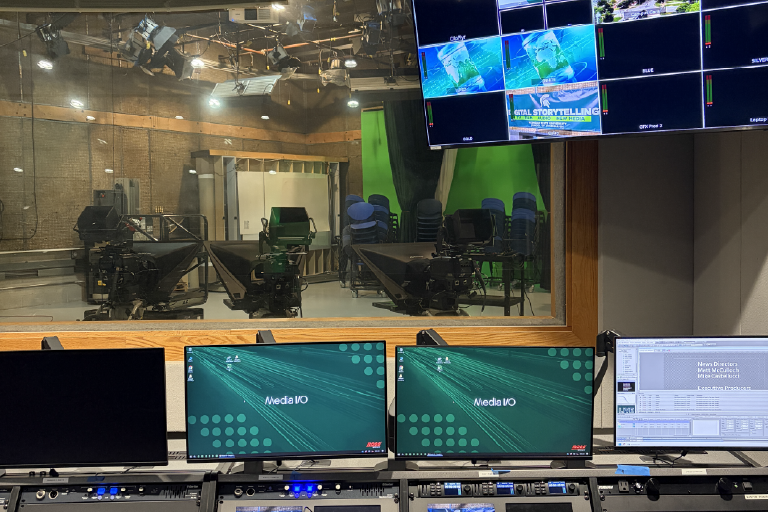
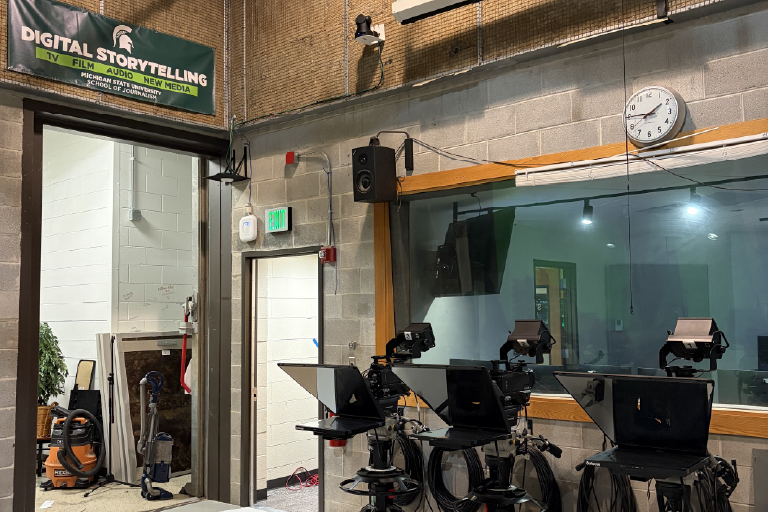
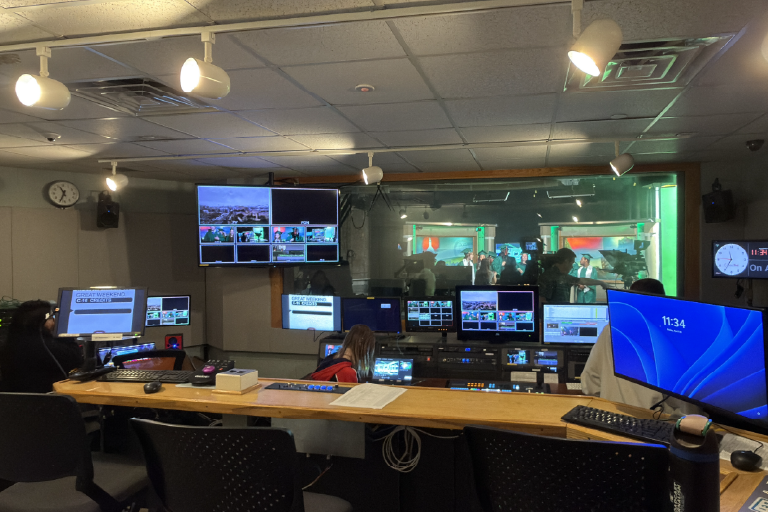
Studio E, part of ComArtSci’s Digital Media Arts and Technology, or DMAT, facilities, received its first major renovation since the building was constructed in 1981. Completed ahead of the 2026-27 academic year, the overhaul replaces technology last upgraded in 2012 with new cameras, a core routing system, an updated switcher panel and dedicated stations for producers.
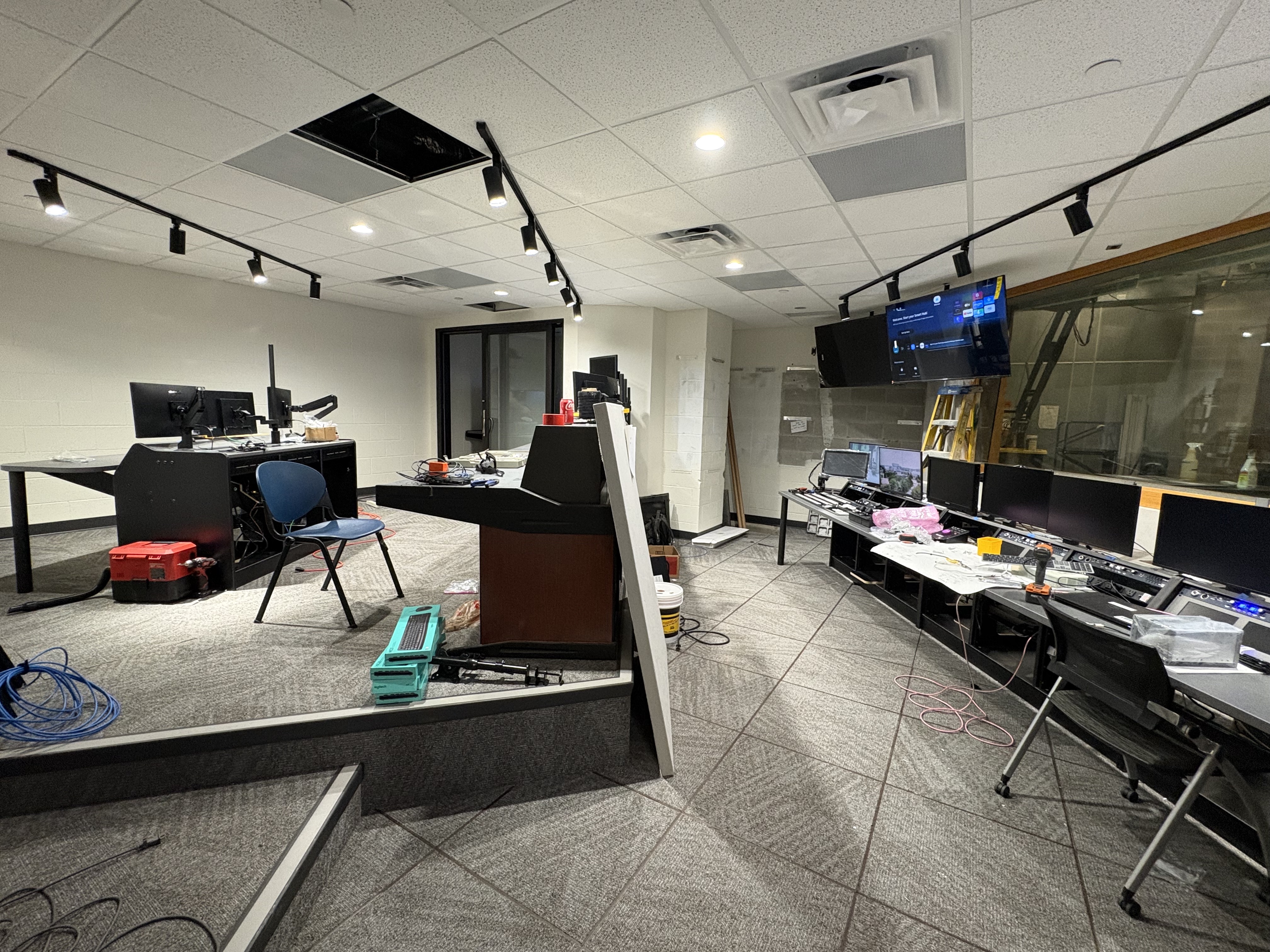
The DMAT facilities include two large production studios. Studio D primarily supports film-style production, while Studio E is a multicamera studio used for instruction, broadcast news productions and student groups including Telecasters.
“There have been lots of technical innovations since then, and we had the opportunity to upgrade everything, so it was time,” said Brian Kusch, broadcast and systems information engineer and instructor.
Kusch said the new equipment will align with systems used for Spartan Vision and B1G+ productions across campus, making it easier for students to move from learning the equipment in Studio E to working on productions elsewhere at MSU.

Matt McCulloch, an instructor in the School of Journalism, producer, network television liaison and StudentU director, teaches the class that produces Focal Point News, a student-produced newscast.
The renovated studio provides more reliable graphics and video playback workflows, a separate audio booth where students can learn the A1, or lead audio engineer, position and an improved green-screen space for the show’s weather segment.
“I am most excited about getting to work on the new equipment, rebuild and rebrand the Focal Point News show that my class produces,” McCulloch said.
Students in McCulloch’s DS 442B Sports class may also occasionally use Studio E to produce a live sporting event for B1G+. B1G+ productions will continue to primarily use the control rooms at the Breslin Center.
Bob Gould, broadcast journalism professor of practice in the School of Journalism, said the updated technology gives Journalism and Digital Storytelling students experience they can use after graduation.
“Journalism and Digital Storytelling students will now have the latest technology to simulate real-world experience,” Gould said. “They can take these skills and use them immediately in many different fields, including broadcast news, sports and other entertainment that uses live production.”
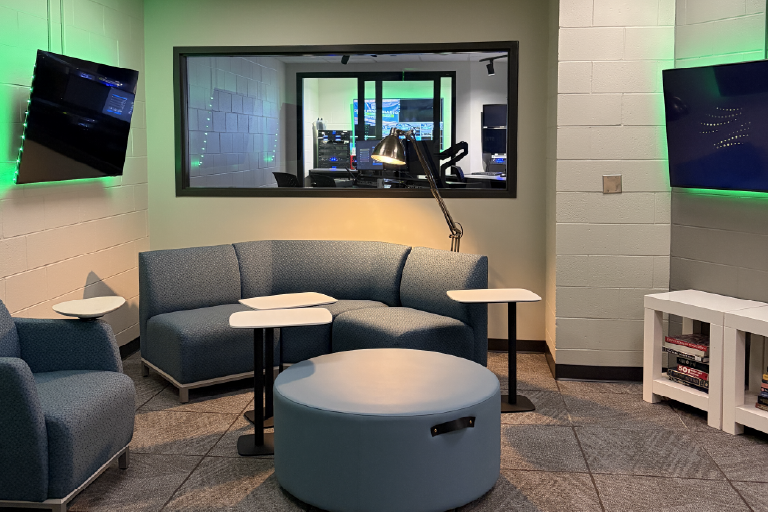
The renovation also expands the control room, giving more students room to work together. Gould expects the updated space to make an impression on prospective students as well.
“Expanding the room to allow more students access and more room to work will make the teaching environment more inviting for both students and faculty,” Gould said.
By Claire Dippel