
Misconceptions about stuttering can shape everything from classroom experiences to workplace interactions, often making it more difficult for people who stutter to communicate freely and authentically.
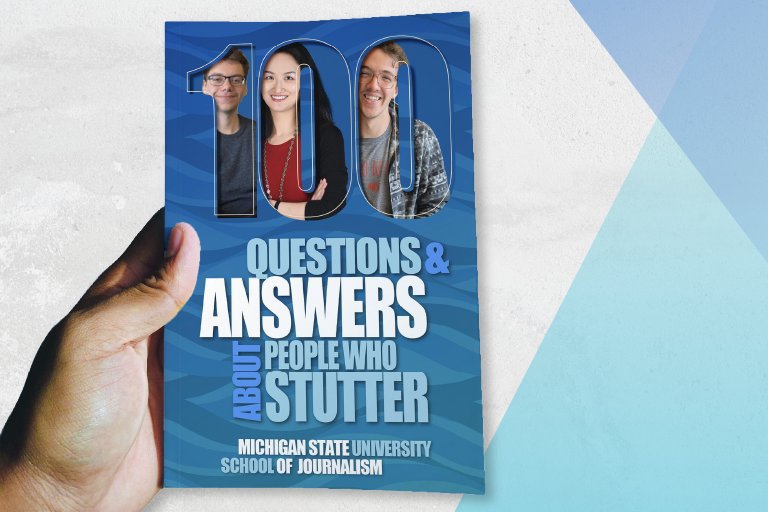
A new collaboration between Michigan State University's School of Journalism and Department of Communicative Sciences and Disorders (CSD) aims to change that through 100 Questions and Answers About People Who Stutter: A Listener's Guide. Scheduled for release July 28, the publication is the 24th volume in the College of Communication Arts and Sciences' Bias Busters series and was developed by students, faculty, researchers and people who stutter.
The Bias Busters series features practical guides designed to help readers better understand people from a variety of backgrounds and experiences by replacing stereotypes with firsthand perspectives and accurate information.
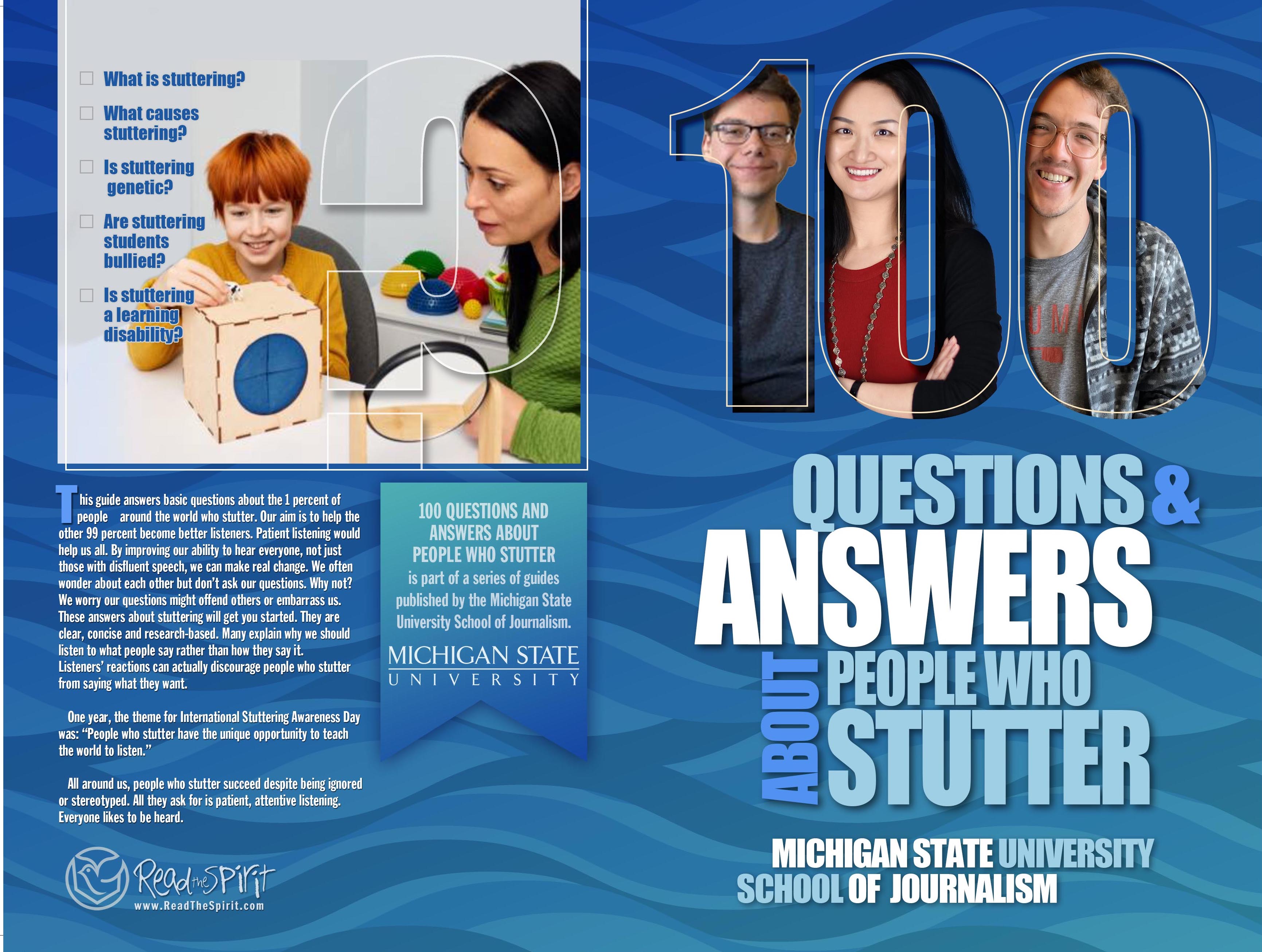
The guide answers 100 common questions about stuttering, covering topics including its causes, genetics, bullying, therapies and current research. It also includes discussion questions for classrooms and community groups, along with four student-produced videos featuring people who stutter sharing their experiences.
Expanding the Bias Busters series
The project began as Journalism Professor Emeritus in Service Joe Grimm looked for opportunities to expand the Bias Busters series to address stereotypes surrounding disabilities while creating a collaboration with the Department of Communicative Sciences and Disorders, whose faculty have researched communication differences and related biases for years.
Bias Busters guides are developed by interviewing people within a community about what they would like others to understand about their experiences. Grimm said that approach made stuttering a natural fit for the series.
"Our model of interviewing people in the group in question about what they would like people to know about them is ideal," Grimm said. "The fact that 99 percent of adults do not stutter indicated this guide could help a lot of people."
The project adopted a guiding principle from International Stuttering Awareness Day: "People who stutter have the unique opportunity to teach the world to listen."
The guide was developed through a JRN 492 course, known as Bias Busters, an interdisciplinary course that brought together students from journalism, communicative sciences and disorders, digital storytelling, public relations, advertising, information science, English, criminal justice, biochemistry and neuroscience. Throughout the semester, journalism students interviewed people who stutter, while CSD students and faculty provided clinical expertise and helped ensure the information reflected current research and lived experience.
Grimm said the project also marks a new direction for the Bias Busters series.
"This guide has opened the door to a new line of guides," he said. "We are now editing a really good one that students have written on blindness and loss of vision."
Combining research with lived experience
For CSD Professor J. Scott Yaruss, whose research has focused on stuttering for decades, the project offered an opportunity to combine scientific knowledge with the lived experiences of people who stutter.
"For me, it is a worthwhile project because people who stutter experience significant societal stigma, and this makes it harder for them to communicate freely and authentically," Yaruss said.
Yaruss said one of the guide's primary goals is addressing misconceptions that continue to shape public understanding of stuttering. One of the most common is the belief that people who stutter could stop if they simply tried harder. In reality, he said, stuttering is neurological in origin, not psychological, and trying harder to avoid stuttering often creates additional challenges.
The guide also offers practical suggestions for creating more supportive conversations.
"Just a willingness to give people the time they need to say what they want to say, an openness to listen to what the person is saying rather than judging them based on how their speech sounds, and the kindness to treat them just like everyone else," Yaruss said.
Students learn from the experts
One of the project's defining features was bringing together journalism students, CSD students and people who stutter to develop the guide together.
For Jia Bin, a doctoral student in Communicative Sciences and Disorders who stutters, the project gave students an opportunity to learn directly from lived experience.
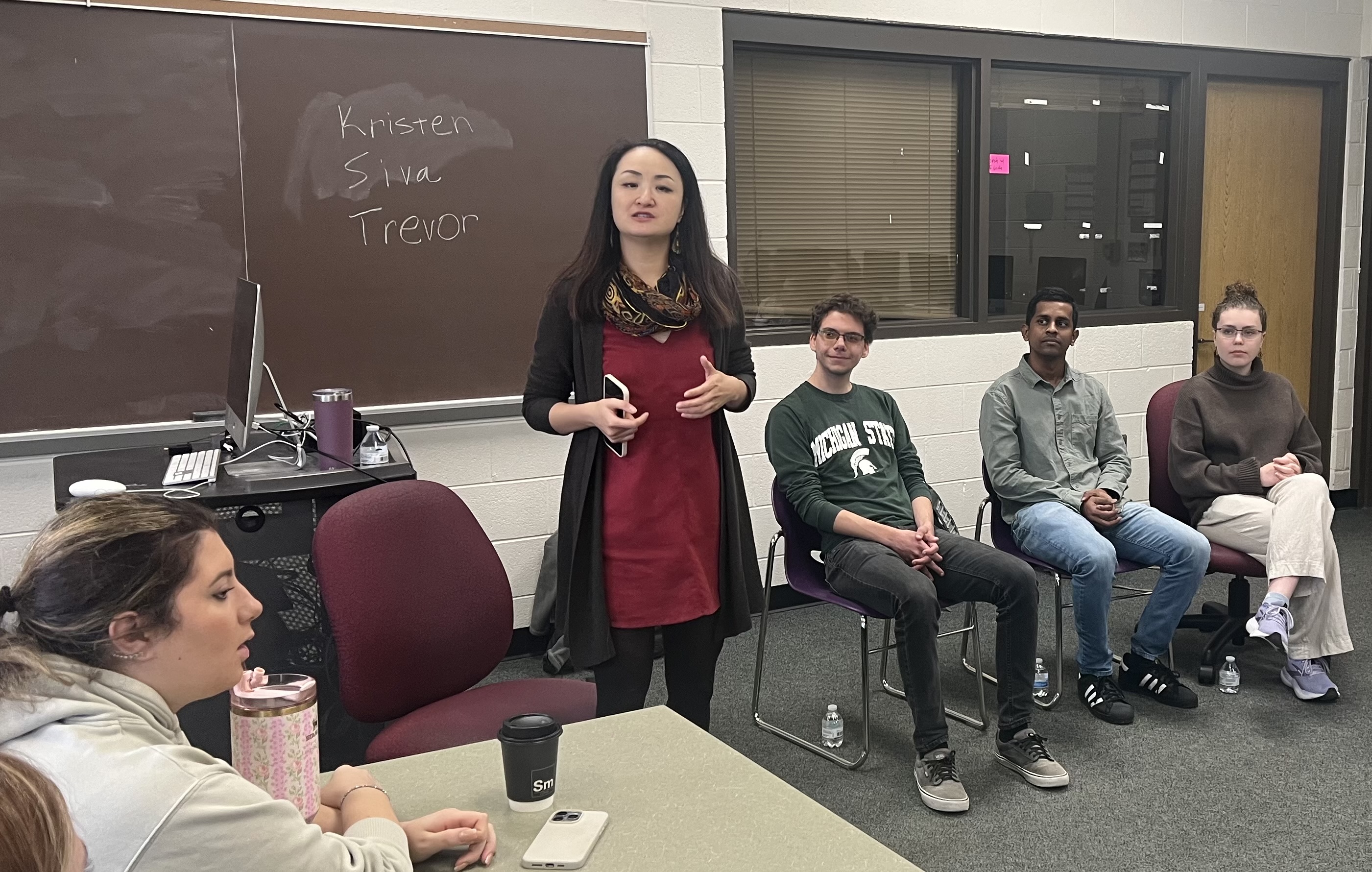
Bin, who leads the Lansing chapter of the National Stuttering Association and MSU's Spartan Stuttering Group, volunteered as a coach throughout the JRN 492 course, organized and led the class's stuttering panel, participated in video interviews for the guide and appears on the guide's cover.
"The project brought together several things that are deeply important to me: stuttering advocacy, education, storytelling and lived experience," Bin said. "I appreciated the opportunity to help students learn directly from people who stutter and create a practical, accessible guide for the broader public."
Bin said hearing directly from people who stutter gave students perspectives they could not gain from textbooks alone.
"A textbook may explain what stuttering is, but a person who stutters can describe what it feels like to introduce themselves, speak in class, make a phone call, attend a job interview or decide whether to disclose their stuttering," she said.
For journalism student Kelsey Grzymski, the experience changed both how she approached reporting and how she communicates in everyday life.
Before joining the project, Grzymski said she knew little about stuttering. Through interviews with people who stutter and collaboration with students and faculty in CSD, she gained a greater appreciation for the importance of thoughtful language and active listening.
"Being able to collaborate with students and faculty helped me approach the subject matter with care and consideration for those who stutter," she said. "They helped make my reporting more direct and to the point, while also using the proper terminology."
"I still carry that mantra with me in my daily life," Grzymski said. "I find myself being a better active listener and letting others fully finish their thoughts before responding."
A resource for better conversations
The guide is intended not only to explain stuttering but also to encourage readers to think differently about communication.
Bin hopes readers come away understanding that stuttering is about much more than the way a person speaks.
"Stuttering is much more than repetitions, prolongations or blocks," she said. "It can shape how people experience communication, relationships, education, employment and identity."
She said one of the guide's central messages is that successful conversations are built on connection, not fluency.
"The goal of a conversation is not to make someone sound more fluent," Bin said. "It should be to listen, connect and give the person the time and space to communicate authentically."
That message also resonated with Sharon Emery, an award-winning author, former MSU journalism instructor and person who stutters who helped teach the course.
"I hope people consider the possibility that stuttering is not so much the speaker's problem as it is the listener's problem," Emery said.
Emery said the guide encourages readers to examine how their own role shapes conversations.
"The world has essentially forgotten how to listen; everyone just wants to talk," Emery said. "Anytime you're engaged in dialogue with another person, remember: your silence is your gift to the conversation."
For Grzymski, the project's impact extends well beyond the classroom.
"I hope readers learn patience and grace," she said. "There are a lot of people in the world that struggle with communication. Every voice deserves to be heard, and I think everyone could benefit from some extra patience as well."
100 Questions and Answers About People Who Stutter: A Listener's Guide will be available beginning July 28 through Amazon and additional major online booksellers.
By Claire Dippel