
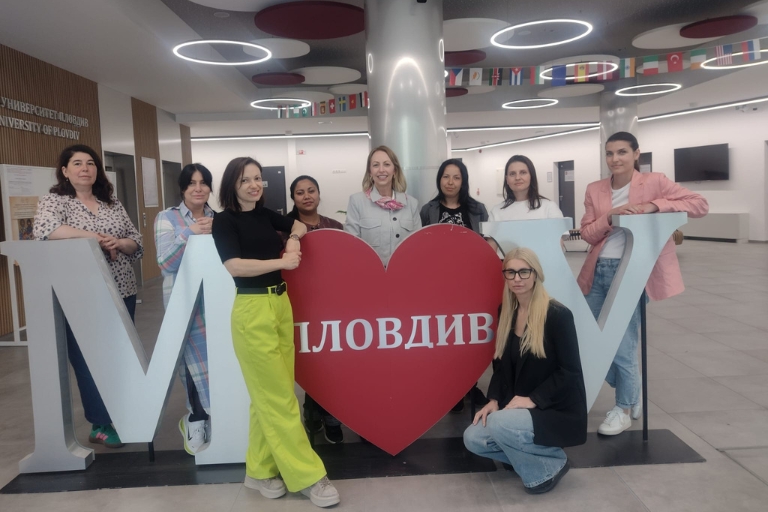
Graduate students at the Medical University of Plovdiv may be among Bulgaria’s first medically trained speech-language pathologists. This spring, Michigan State University’s Kristin Hicks helped them practice the clinical decisions they will face when caring for people with communication and swallowing disorders.
Hicks, clinical education coordinator in MSU’s Department of Communicative Sciences and Disorders, spent three weeks at the university in May through the Fulbright Specialist Program. Working with MUP Professor Dobrinka Georgieva, she helped expand clinical training in a master’s program preparing students for health care roles. In Bulgaria, speech-language pathologists have traditionally worked primarily in education and private practice settings.
A partnership built over time
The Fulbright project grew from a longstanding partnership between MSU and MUP through an agreement for scholarship exchanges through the Erasmus+ Programme. Hicks has worked with visiting MUP faculty since 2018, sharing approaches to clinical education in the United States. MUP students visiting MSU have also joined her clinical practicum course and observed speech-language pathologists in health care settings.
Georgieva reached out to Hicks in 2025, as she thought the timing was right to further develop MUP’s speech pathology program and to bring in someone who works closely with the graduate student clinical practicum experience.
Hicks became the fourth Fulbright scholar from the Department of Communicative Sciences and Disorders to travel to Bulgaria to further connect the SLP programs from each university to support the development and advancement of medical SLP education in their country.
“As a speech language pathologist who has worked in health care, and now in higher education for the past 10-plus years of my career, preparing MSU SLP graduate students as the next generation of clinicians, I am passionate about the mission of MUP's new program,” said Hicks. “I highly regard the relationships I developed when we hosted visitors from their program here and was very excited to now be able to not only further develop those relationships in-person, in their home country, but also directly work and get to know their graduate students.”
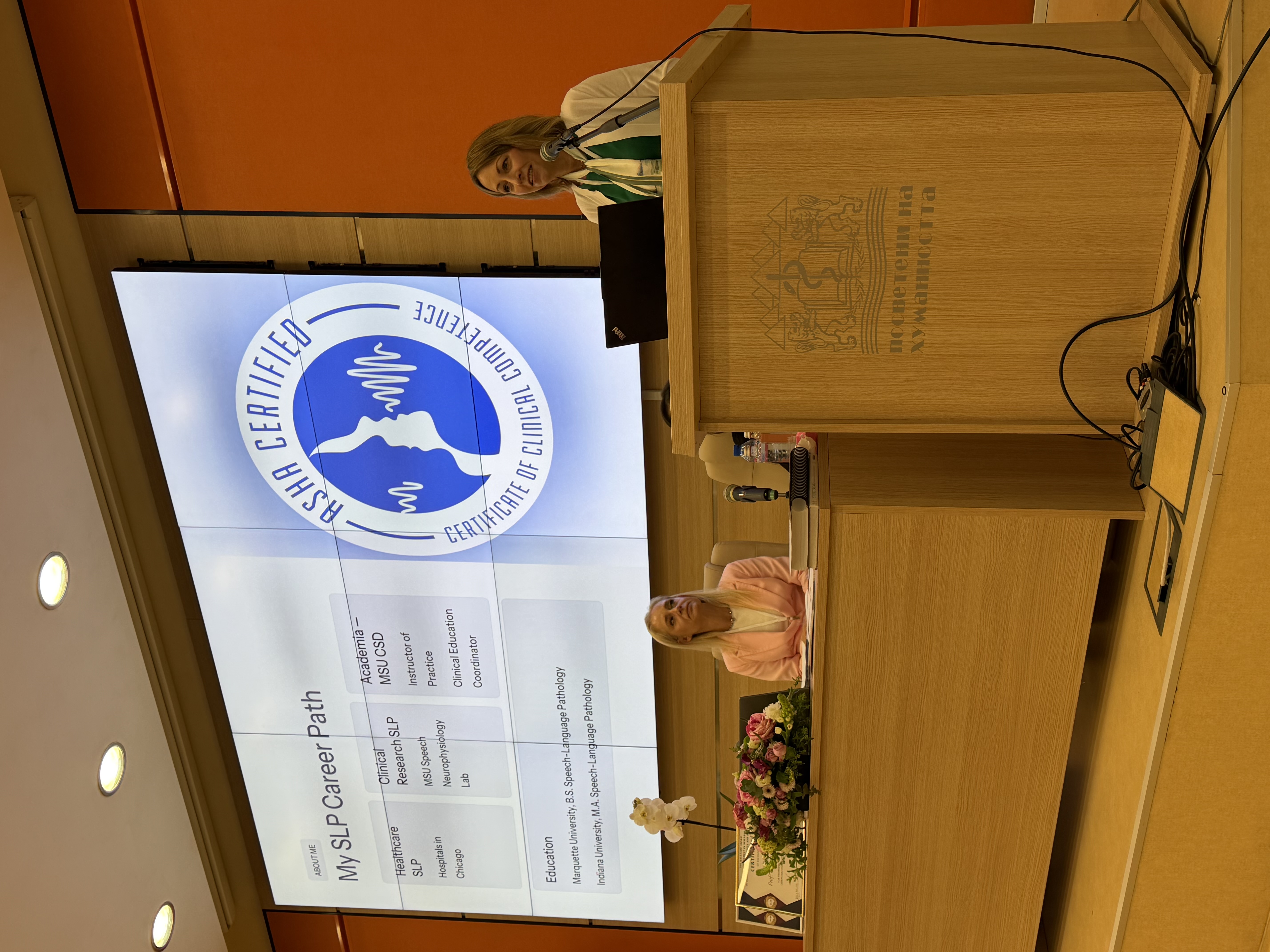
During her visit to Bulgaria, Hicks drew on that experience while considering how MUP could develop training suited to its own health care system and communities.
“I was mindful of making sure I showed support for them in realistic ways, recognizing that it takes time to build something and to make changes happen,” Hicks said.
MUP Professor Kostadin Chompalov, a neurologist who worked with Hicks during the visit, said the training comes at an important point for the field.
“This is especially important in Bulgaria, where medical speech-language pathology is still developing,” Chompalov said. “I believe that continued collaboration between MSU and Medical University of Plovdiv can help strengthen this field and, most importantly, improve care for people with communication and swallowing disorders.”
Hicks sees the collaboration between the two university programs as an answer to bridging the gap in care in Bulgaria.
“For example, if an individual has a stroke or a traumatic brain injury and has difficulty speaking, communicating or swallowing as a result, in Bulgaria, the neurologist cares for the patient, addressing these concerns within their capacity as a physician, but there is no SLP evaluating the patient in the hospital right after the stroke, and no rehabilitation with therapists following the MSLP program at MUP is changing that,” said Hicks.
With the help of Simucase, students could see and do what a medical SLP does in the United States in a safe, simulated learning environment.
“The intent was to further their understanding and drive to be that change in Bulgaria — the first generation of medical SLPs in their country,” said Hicks.
Hicks also presented on clinical experiences in graduate education at the first annual conference of the Bulgarian Society of Medical Speech Language Pathologists.
For Hicks, the most rewarding part of the project was working with students who could help shape the profession’s future in Bulgaria.
“I love working with graduate students and having the opportunity to work closely with graduate students in Bulgaria as they embark on being some of the first medically trained SLPs in their country was very rewarding,” she said.
By Casey Halas