

As a professor of practice in Michigan State University’s fully online Master of Science in User Experience (UXMS) program, Louise Lozen Stauffer brings decades of industry experience into the virtual classroom.
When she began her own college career, she felt torn between art and science. Industrial design offered a bridge, a place where she could “sketch with one hand and calculate with the other.” Even before user experience had a formal name, she knew she was less interested in shaping objects and more interested in shaping the experiences those objects made possible.
That instinct became the through-line of a career spanning the automotive industry, where Stauffer worked across design, engineering and research roles at companies including General Motors and Ford. She became known as the person in the room asking, “What is this actually like for a person?” Her work integrated mixed-method research, human factors and systems thinking to influence vehicle architecture, digital interfaces and emerging technologies, leading to 14 patents and leadership roles focused on autonomous vehicles, connected systems and experience strategy.
In January 2024, Stauffer joined the Department of Media and Information’s UXMS program, where she teaches Usability Evaluation (UX 820), Accessibility and Design (UX 835) and UX Special Topics – The Bigger Picture (UX 802).
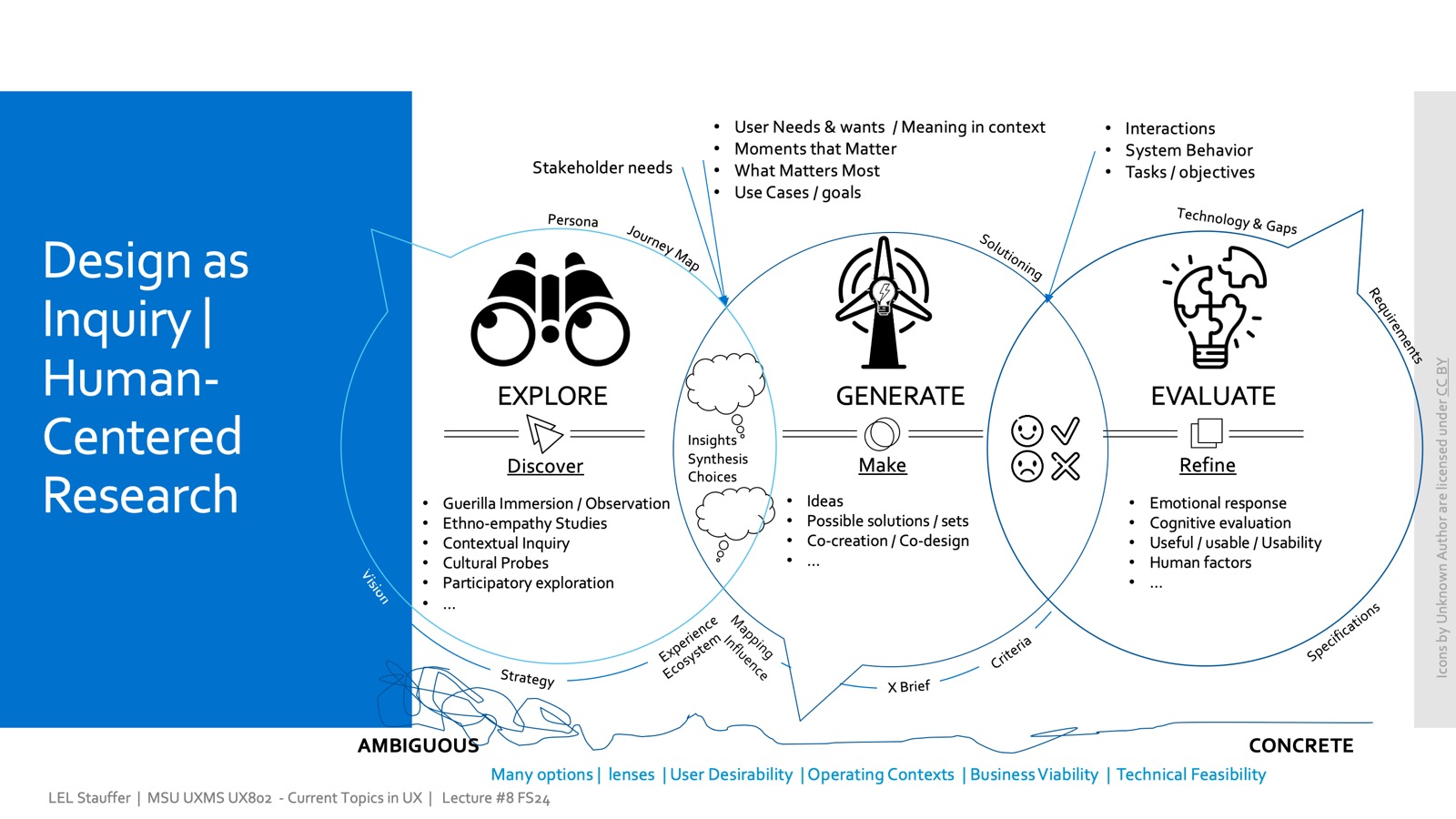
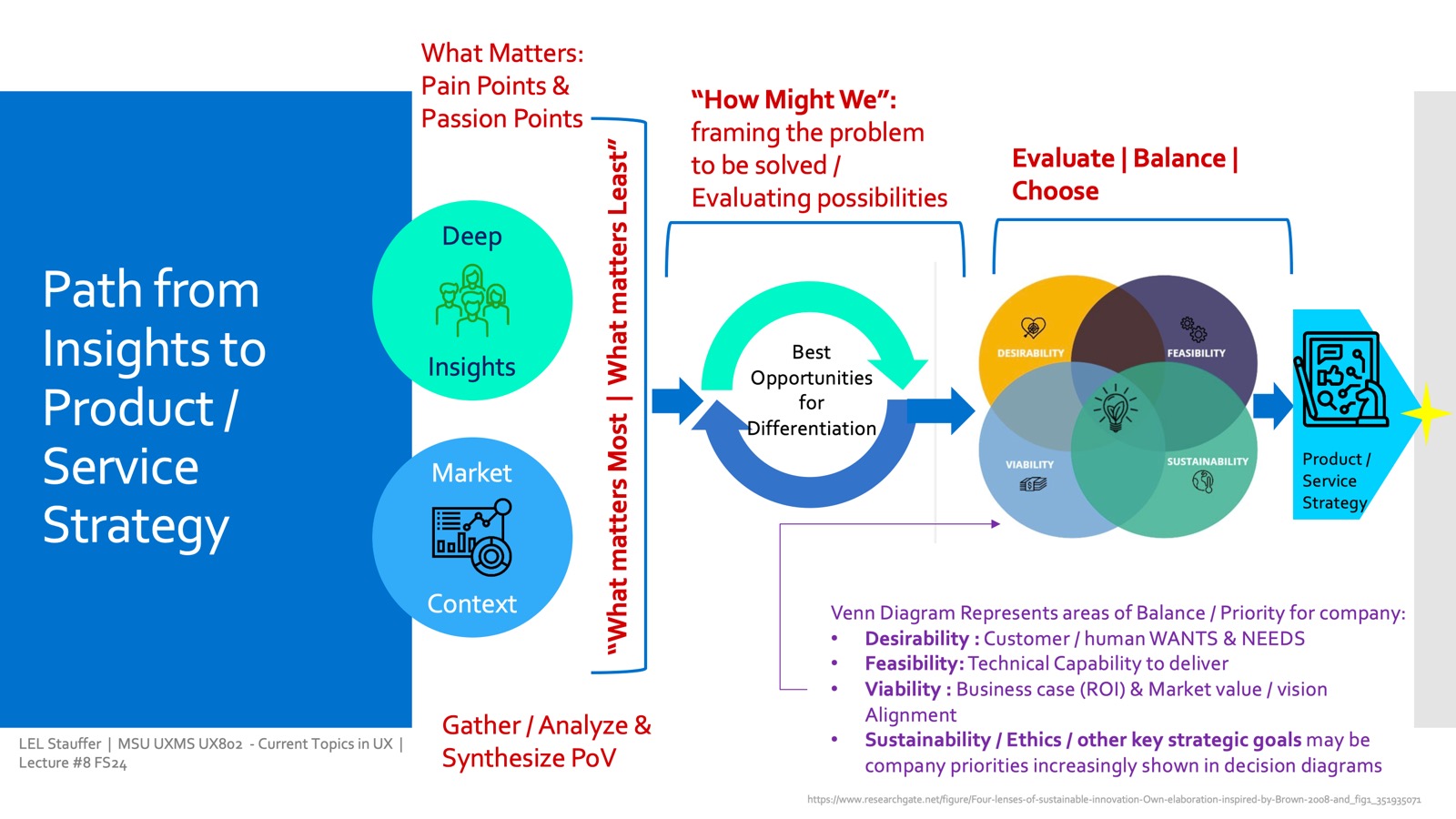
“The human-centered orientation of the program is key to good experiences,” Stauffer said. “It all starts and iterates with user research.”
In her Usability Evaluation course, student teams conduct real-world studies for an external project sponsor, presenting findings and recommendations at the end of the semester. The experience mirrors professional UX practice, requiring students to design research plans, test with participants and translate insights into actionable results. Stauffer meets with each team before they field their research and remains closely engaged throughout the process.
The online, asynchronous format has become her preferred way to teach. Structured discussions encourage students to build on each other’s ideas, while scaffolded assignments culminate in portfolio-ready projects.
In Accessibility and Design, students evaluate public spaces in their own communities, applying regulatory and theoretical frameworks to lived environments. In The Bigger Picture, they create service blueprints to diagnose and improve complex systems that frustrate them in everyday life.
Across courses, Stauffer emphasizes one principle: always return to the user.
“Don’t just design from your own point of view,” she said. “Know your users, their goals and the context they operate in. And keep checking your work against that reality.”
As the UX field expands into experience and service design, Stauffer believes graduates must look beyond screens and tools. By grounding students in human-centered design philosophy and mixed-method research, she’s confident the UXMS program prepares them to navigate evolving technologies while staying anchored to what matters most: creating experiences that are useful, usable and meaningful.